
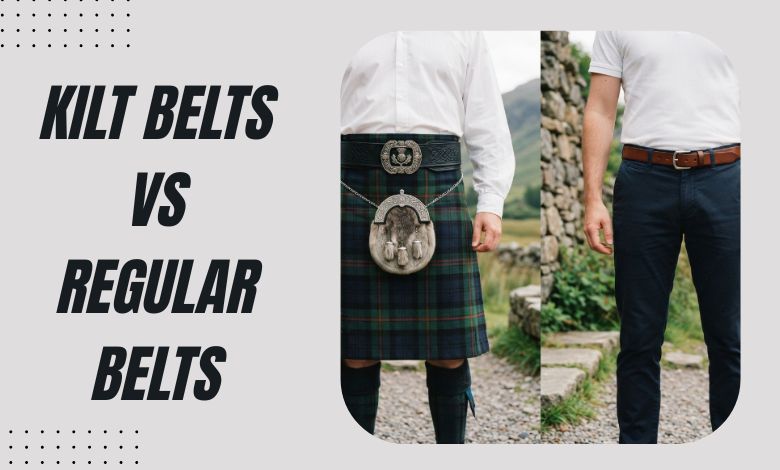
Belts are generally considered an everyday essential but for traditional Highland dress, not all belts are the same. The kilt is a structured garment with its own background, weight and figure and wearing the right belt can transform the way the kilt sits and appears upon the body. This is where kilt belts are different from regular belts. They have similar functions, but are intended for different groups—one for everyday pants and one for the peculiar form of kilt pants.
Not All Belts Are the Same: Understanding the Basics
What Is a Kilt Belt?
A kilt belt is a wide belt with a defined belt shape that has been created especially to be worn with a kilt. Typically also accompanied with a large fancy buckle and intended to accentuate the formal Highland wear, not function merely to keep the garment up. Traditional kilt belts may be complemented with other items such as sporrans, kilt jackets or ghillie shirts, creating a complete outfit, not a standalone item.
What Is a Regular Belt?
The purpose of a regular belt is to tie on trousers or jeans and is mainly functional and very basic in style. It is generally not wider, softer and designed for standard belt loops. Its job is simple: Make pants easy to wear and comfortable but not showy.
Built Different: Design and Structure Comparison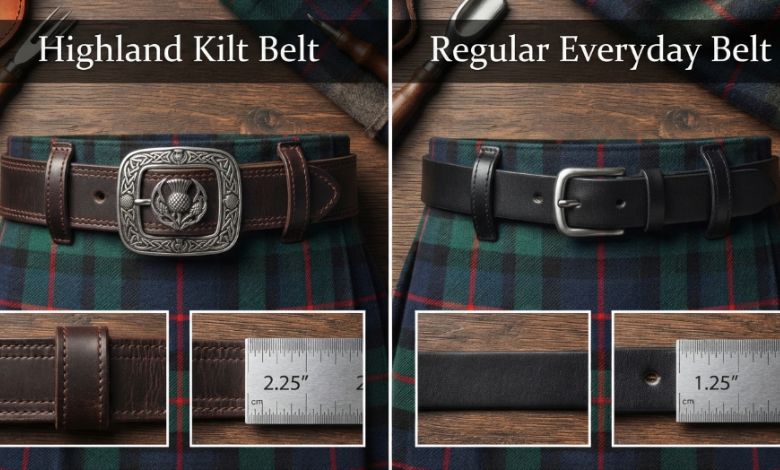
Width Matters: The Standard Kilt Belt Size
There’s a big advantage between the width of the two. Kilt belts are typically 2.25 inches in width and add a bold and structured appearance. This width is by design to match the thickness of the kilt fabric and pleats. Regular belts tend to be 1 to 1.5 inch wide, however, which offers no benefit to the visual weight of an outfit incorporating a kilt.
The 2.25″ Rule: Why Standard Belts Slip in Kilt Loops
Most kilts nowadays have a wider belt loop which will go up to the normal 2.25″ kilt belt. When the belt doesn’t fit the loop space it frequently slips, twists or lies in an uncomfortable position. Not only does it help the appearance but it also makes the outfit less stable, and less structured.
Buckle Style: Statement vs Everyday
The belt buckles such as Silver Belt Buckle for Kilt are frequently large, engraved, and symbolic. They may be Celtic, or in imitation of clan marks, or finished with shiny metalwork as the focus of the garment. Plain buckles have a somewhat smaller size and don’t imply any particular style, as their purpose is to match any normal clothing, not draw attention to wear.
Centered Symmetry: Positioning Your Buckle for the Highland Look
The buckle is not only practical and part of tradition in Highland dress, it also dominates the attention levels and creates a level balance with the rest of the dress. The belt buckle on a kilt should sit at the centre of the kilt, beside the man/male apron and be symmetrical. This is not a styling rule for regular belts because they’re just tightened for comfort.
Material and Build Quality
To resist weight and shape, kilt belts are sometimes made from a different type of leather that is thicker and reinforced with stitched material. Lighter leather or artificial or synthetic fabrics can be used for regular belts rather than durability, they are more concerned with their flexibility.
Rigidity and Support: Preventing the Kilt Edge from Folding
A well organized kilt belt will keep the top of the kilt flat and straight. It will not fatty when folded or collapsed around the waist, particularly if combined with heavier tatted clothes. Regular belts don’t have this structure detail, and can even mess the kilt up.
Function First: Purpose and Practical Use
Why Kilt Belts Are Made for Kilts
There are many reasons why people wear kilt belts, but one of them is a certain functionality, namely, supporting the shape of Highland dress. The belt complements a complete outfit such as a sporran and jacket for complete posture, balance and traditional style.
The Waistcoat Exception: When to Skip the Belt Entirely
A well organized kilt belt such as Scottish Leather Kilt Belt will keep the top of the kilt flat and straight. It will not be fatty when folded or collapsed around the waist, particularly if combined with heavier tatted clothes. Regular belts don’t have this structure detail, and can even mess the kilt up.
Everyday Function of Regular Belts
Band members wear regular belts. They are more concerned about comfort, adjustency and practicability than orientation to the visual tradition. They can be worn for jeans, pants and less formal clothing.
Can You Use a Regular Belt with a Kilt?
A normal belt could be worn with a kilt but this is not appropriate. It sometimes does not seem to fit correctly or does not fit the belt loops, and it can detract from the traditional Highland attire. If that’s the case, choose the right kilt belt for authenticity and balance.
Style Impact: How Each Belt Changes Your Look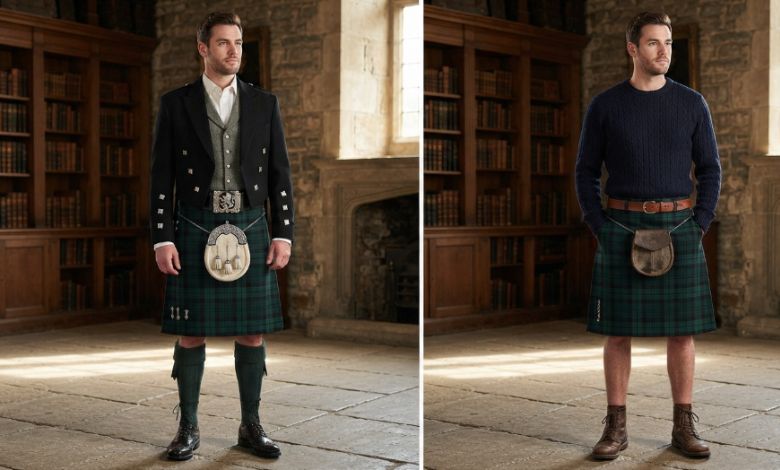
Formal Highland Dress vs Casual Wear
A kilt belt instantly puts a Highland outfit into formal attire. It provides the structure and tradition. A tough belt, on the other hand, makes for a casual look and can transform a kilt into a curiosity instead of a traditional outfit.
Visual Balance and Proportion
Kilts typically are not the lightest of clothing items, therefore it is important for them to be proportionate. A wide kilt belt balances the legs and the lower section of the body, but a thin regular back belt can give the impression that the outfit is not complete or is out of balance.
Making a Statement with Accessories
One accessory that is frequently one of the most striking accessories for Highland outfits is the kilt belt. It can be used to identify individual or clan identity with other accessories such as a sporran or kilt pin. It’s not something that would appear in regular belts.
When to Wear What: Choosing the Right Belt for the Occasion
Formal Events and Traditional Settings
For weddings, ceremonies and formal Highland events the only sensible thing to wear around the waist is a kilt belt. It adds to the traditional look and is culturally expected.
Casual and Everyday Outfits
If you are trying out some of the new kilt fashion and not going for heavy leather or very thick cords, a lighter belt or none at all might be indicated for style depending on the outfit structure, not to mention casual style.
The Ghillie Shirt Pairing: Using Belts for a Rugged Casual Look
A kilt belt can add to the rugged and masculine look of a Ghillie Shirt and Kilt. It adds definition at the waist level and is not restricting while it is quite relaxed and outdoors theme, for festivals or casual activities.
Modern Styling Flexibility
But in today’s fashion, more liberties are taken and some modern kilt wearers combine traditional with casual. Knowing when to be traditional and when to try new things, though, is essential to finding balance.
A Quick Comparison and Why You Should Choose Irish Kilt Shop
The main difference between the two is the kilt belt has to be wide (approx. 2.25″) and structured to serve Highland dress purposes and the regular belt is narrower, flexible and intended for regular wear trousers. At Irish Kilt Shop, you get the high quality belts for your kilts.
Kilt belts are known for their elaborate buckles with decorative designs, as well as their sturdy construction for support, while the common belts emphasize quality and durability. First and foremost, kilt belts give an extra regal look or harmony to the traditional kilt, and a regular belt doesn’t give the same effect.
Conclusion
The difference between kilt belts and regular belts is more than just the size. It’s more about the concept, tradition and how every piece interacts with its garment. The kilt belt is designed to complete the Highland look, in addition to giving structure and cultural authenticity to the kilt, the regular belt is designed for the practicalities of everyday wear. But it is more than just a choice of style, it’s a choice of how your kilt looks, feels and represents tradition. Then if you want it to be complete and balanced in the correct manner, there is always a specific kilt belt that you can select for the process.

