
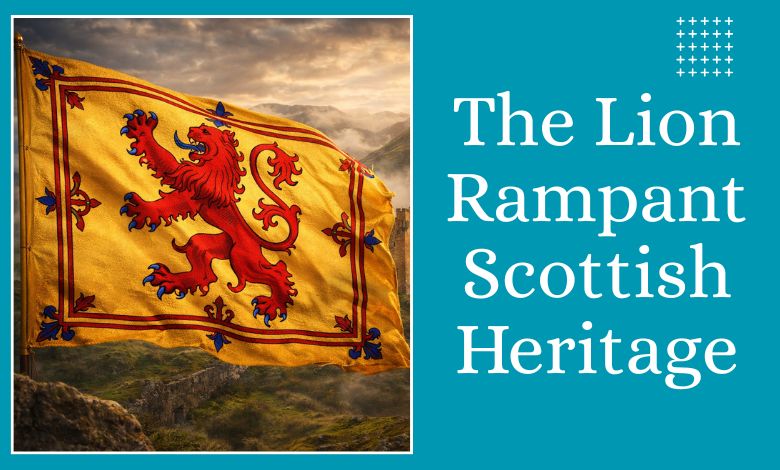
Have you ever heard about The Lion Rampant? This is actually one of the recognised symbols of Scotland. It also appears on the Royal Banner because it is linked to the Scottish monarchy. This red lion on a gold field has stood for royal authority and national pride for centuries.
It actually began as a symbol of kings and courts which later found a place in everyday culture. But today, you can see it everywhere even on clothing, accessories and souvenirs across Scotland.
As you already know about The Lion Rampant, let’s explore the origins, meaning and modern use of the symbol.
Origins of the Lion Rampant
Early Heraldic Traditions
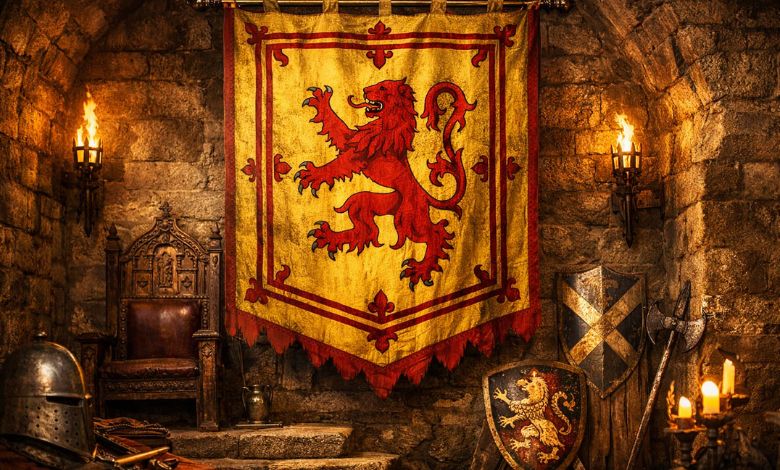
The art of heraldry started to develop in the twelfth century in medieval Europe. Noble families and knights had to have distinct symbols that they could be recognized by in the battlefield and in royal seals. These designs have quickly been incorporated into family identity and royal power.
Animals were mostly preferred as they had powerful meanings. Eagles were a symbol of foresight and mightiness, and lions were a symbol of bravery, power, and leadership. Specifically, the lion gained popularity in royal families in Europe. Its decisive stance and a strong image had predisposed it to kings who wished to have a symbol which made them feel powerful.
Adoption by Scottish Kings
The lion in Scotland received its royal association during King William’s rule which lasted from 1165 until 1214.People used to call him William the Lion, and he had a personal symbol of the red lion in a rampant position. This symbol began to appear all over the place–on the king’s seals, shields, and flags.
Eventually, this upright lion on a gold background became the symbol of the Scottish Crown. It wasn’t really meant to be a national flag for everyone to use. Instead, it was a royal symbol, representing the king and the Scottish throne’s power.
What the Lion Rampant Represents
Symbol of Courage and Authority
The lion serves as a powerful symbol of leadership throughout various cultural traditions. The heraldic system used lions as its official emblematic animal because royal families selected the lion to showcase their desired royal attributes which included bravery and leadership and territorial defense.
A Sign of Royal Status
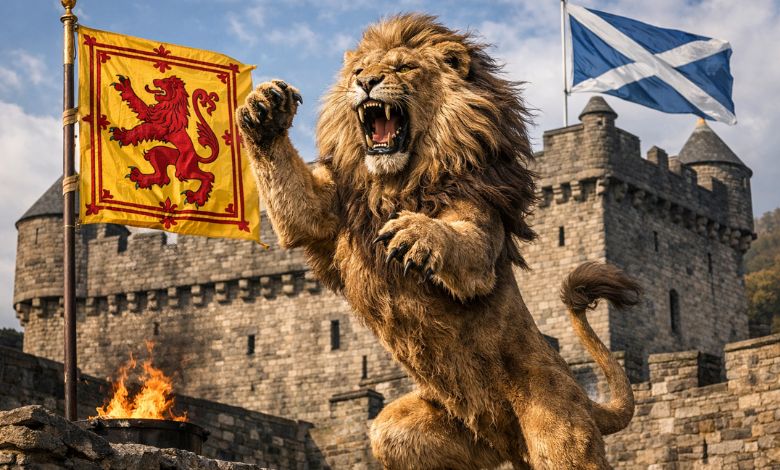
The “rampant” actually describes the lion standing upright on its hind legs while the forelegs raised. This posture shows its alertness and readiness of the lion indicating its alertness to defend its territory through this specific posture. The position in heraldic design provides the symbol with both energetic movement and authoritative power. Scottish kings used the Lion Rampant as their royal emblem to demonstrate their authority and power.
Meaning Behind the Colours and Shapes
The lion sits against a background that displays either rich yellow or gold tones. The bright field shows the red figure because it creates a bold appearance which makes the banner easily recognizable. The decorative red border displays its small fleurs-de-lis which fill the space between its edges. The ornamental frame adds design elements to the artwork, while its European heraldic style traces back to its historical origins.
The Lion Rampant in Modern Scotland
Official and Ceremonial Use
The Lion Rampant remains present throughout Scotland for official purposes and ceremonial events. The flag displays at royal homes when the king or queen visits those locations. The banner is used during official state functions and ceremonial visits and throughout major national celebrations that require royal representation.
The banner appears during historic ceremonies and traditional public celebrations. The symbol acts as a historical testament to Scotland’s royal heritage which includes the entire royal family who have worn the emblem throughout history.
Cultural and Popular Appearances
The Lion Rampant continues to be used in official and ceremonial functions throughout Scotland. It is most often seen at royal residences when the monarch is present. The banner is displayed during state ceremonies and official visits and major national celebrations which require royal representation.
The banner appears in historic ceremonies and traditional gatherings. The emblem functions in these contexts to highlight Scotland’s royal history and its connection to the entire dynasty of kings who ruled the nation.
Connection to Kilts and Traditional Dress
Symbolism in Scottish Clothing
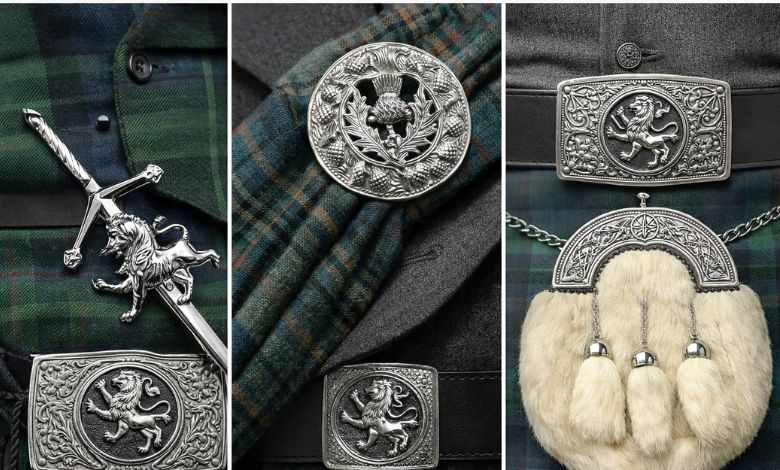
The Lion Rampant appears on both banners and flags while it also shows itself through traditional Scottish attire which uses small elements to complete the full outfit. The lion design appears on many kilt pins which create a heritage connection to the front apron. The same emblem appears on belt buckles which create a traditional appearance for the waistline.
The Lion Rampant brooches become common jacket and plaid accessories while some sporrans display the symbol through their metal cantle design. The small elements which appear in this work appear simple yet they provide a complete historical context for the entire visual presentation. The emblem provides the outfit with royal and traditional elements while it keeps the original design intact.
Wearing the Symbol with Pride
People often wear Lion Rampant accessories at weddings, parades, and cultural festivals. The Scottish roots and family heritage of a person can be displayed through this straightforward method. The symbol connects the outfit to centuries of tradition, even when the kilt itself follows a modern design.
The Irish Kilt Shopoffers traditional kilts and accessories, which enable customers to create authentic traditional outfits that include items displaying this historic emblem.
Difference Between the Lion Rampant and St Andrew’s Cross
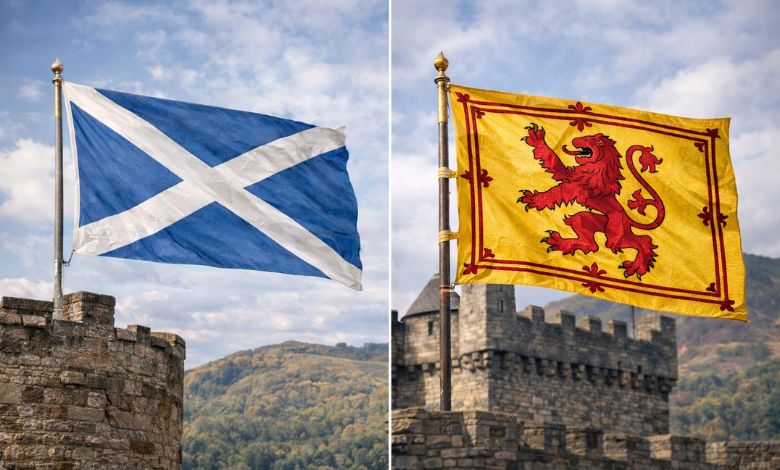
The Scottish nation uses two distinctive flags which represent different meanings through their two separate designs. Both flag designs are known to many people yet they function differently according to Scottish customs and official Scottish practices.
Andrew’s Cross, serves as Scotland’s official national flag. The flag displays a white diagonal cross on a blue background which people use to display their national identity at public spaces and government buildings and sporting events. The flag most people use to show their Scottish pride through national events and celebrations and daily activities represents their Scottish identity.
Scotland uses the Lion Rampant as its official royal banner. The flag displays a red lion on a gold background which represents the royal family but not the entire nation. The public recognizes it, but its authority exists only through royal powers during specific ceremonial events.
A Lasting Symbol of Heritage
The Lion Rampant continues to reflect Scotland’s royal past and the traditions that shaped the nation. Its visual representation contains historical records which connect today’s Scotland to its regal era marked by monarchs. The emblem continues to serve as a powerful symbol which represents both power and bravery and the essence of the nation.
The Lion Rampant appears throughout various aspects of daily existence. The symbol shows up in artistic creations and tourism brochures and traditional Scottish clothing. The symbol appears in decorative wall items and kilt accessories to maintain Scotland’s cultural heritage for both local residents and international guests.
FAQs: