Irish vs Scottish Kilts: Understanding the Real Differences in History and Tradition

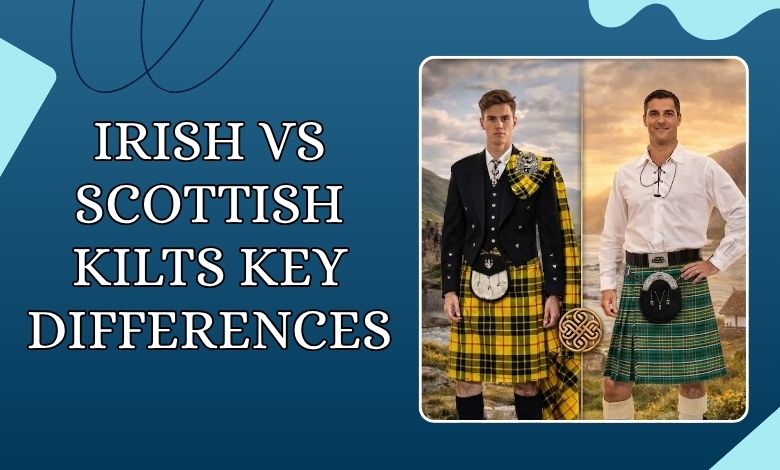
Kilts serve as a symbol for Celtic heritage, but people believe that all kilts share identical design. The Irish kilt and Scottish kilt maintain significant historical, symbolic and stylistic distinctions between their respective designs. The two items share visual similarities but their different cultural meanings and historical origins create separate identities.
The proper selection of Irish and Scottish kilts requires understanding their differences which enables you to match the correct kilt to your cultural background and upcoming events and distinctive fashion preferences.
The Historical Development of Scottish Kilts
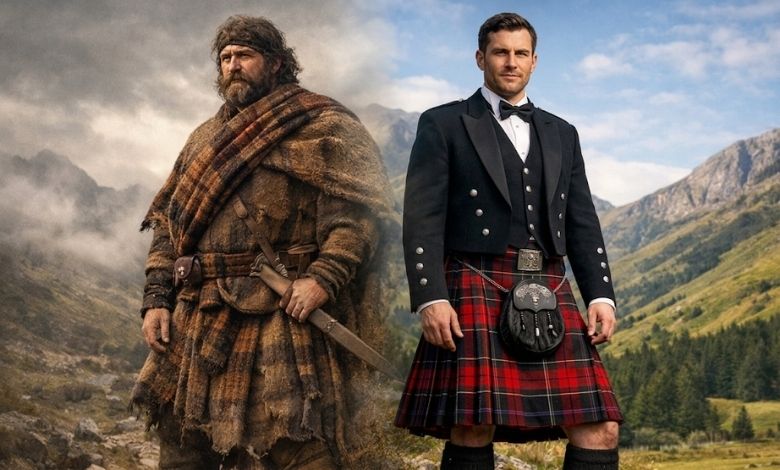
The origins of Scottish kilts extend back to the 16th century which scholars have extensively documented. The great kilt evolved from its original design which consisted of a large wool garment that people wrapped around their bodies and secured with a waist belt. The kilt has evolved over the years into its current form which includes tailored design elements and pleated construction.
Scottish kilt tradition developed around the concept of clan identity. Each clan created its own tartan design which visually displayed their family connections and regional ancestry. The tradition of clan-based Scottish Highland dress continues to exist in the present day.
Clan Tartans and Ancestral Identity
Scottish tartans are traditionally tied to surnames and family history. Wearing a specific tartan often reflects ancestral belonging rather than simple regional pride. These patterns are registered and preserved through official Scottish records.
The Scottish Kilts collection at Irish Kilt Shop enables visitors to investigate traditional clan patterns while heritage-based tartans serve as the main design element of the collection.
The Evolution of Irish Kilts
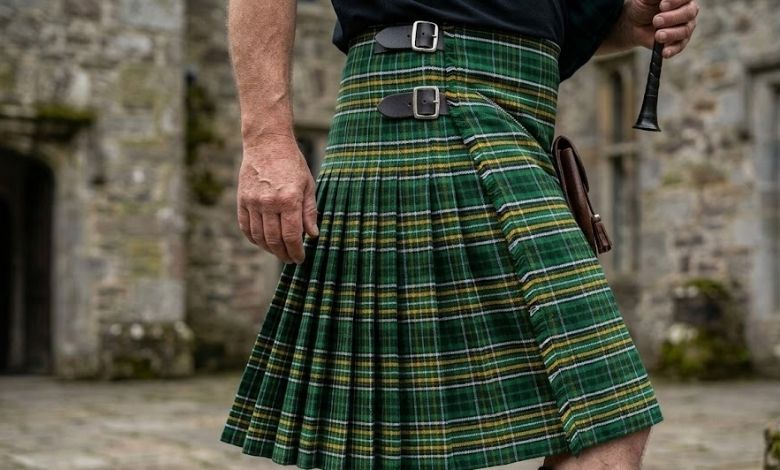
Ireland has ancient Gaelic clothing traditions, which include the saffron léine, but people started to wear the structured kilt throughout Ireland after they adopted it from Scotland. The 19th and early 20th centuries saw Ireland enter a cultural revival which brought forth a national identity movement, during which the kilt became a part of that cultural revival.
Ireland did not follow Scotland’s tradition of organizing tartans according to clan membership. The use of county-based tartans became more widespread throughout the country.
County Representation Over Clan System
Irish kilts show a stronger connection to specific counties than to particular family names. People can use Kerry or Galway tartans for regional representation which does not depend on their actual family heritage. The modern era established many Irish county tartans as official designs which did not exist during medieval times. The Irish County Kilts section shows how Irish regional identity differs from Scottish national dress through its specific design elements.
The Saffron Kilt and Its Irish Significance
Irish kilts show a stronger connection to specific counties than to particular family names. People can use Buchanan Tartan Kilt or Royal Stewart Tartan Kilt for regional representation which does not depend on their actual family heritage. The modern era established many Irish county tartans as official designs which did not exist during medieval times. The Irish County Kilts section shows how Irish regional identity differs from Scottish national dress through its specific design elements.
Differences in Formal Kilt Styling
Scottish people wear formal clothing which consists of a Prince Charlie jacket or an Argyll jacket together with a sporrans, ghillie brogues and clan tartan hose. The structure of the body uses traditional elements which originate from Highland dress codes. The Irish formal style maintains a similar structure but uses county tartans and saffron kilts as its main patterns instead of clan-based designs. The focus shifts from family lineage to national or regional representation.
Modern Variations and Everyday Wear
Today, both Irish and Scottish kilts are available in modern interpretations beyond formal events. Utility kilts and hybrid designs provide comfortable and durable clothing options for casual use. The Utility Kilts combines traditional design elements with modern functionality through its reinforced stitching and flexible fabric materials.
The contemporary fashion trends of today have transitioned from ceremonial use to become suitable for regular daily fashion. Scottish kilts use heavyweight wool as their primary material for formal events while Irish kilts permit designers to use multiple materials that fit modern fashion trends.
Cultural Identity and Symbolism
The main difference between two different styles of Scottish kilts and Irish kilts exists because of their matching heritage. Scottish kilts show heritage through their design which represents both clan ancestry and Highland traditions that have existed for hundreds of years. Irish kilts showcase their traditional clothing through their county celebrations while they establish their cultural identity through their heritage revival movement.
The two traditions share Celtic heritage but they express affiliation through different methods. The decision between the two options requires you to choose either a specific clan heritage or a complete regional and national identity.
Conclusion
The historical development of Irish kilts and Scottish kilts shows major differences despite their common structure. Scottish kilts center on clan identity and ancestral tradition. Irish kilts focus on county representation and saffron heritage which developed through cultural revival.
Your understanding of these distinctions will help you select a kilt that represents the appropriate cultural meaning. The two styles which represent Celtic identity use their individual historical backgrounds to create strong cultural symbols.
FAQs: